
Basement waterproofing · Valparaiso, IN
Basement Waterproofing and Perimeter Drains in Valparaiso, IN: Damp Walls, Floor Seepage and Musty Air
A damp line on the wall, a puddle along the edge of the floor after a thaw or a smell you cannot scrub out all say the same thing: water is getting into the basement, and it is not going away on its own. The fix depends on where the water comes from, and there are three very different sources.
This page helps you tell them apart, shows what interior drains and wall systems actually do and lists what to settle before anyone breaks a floor. If water is rising right now, stop reading and call.
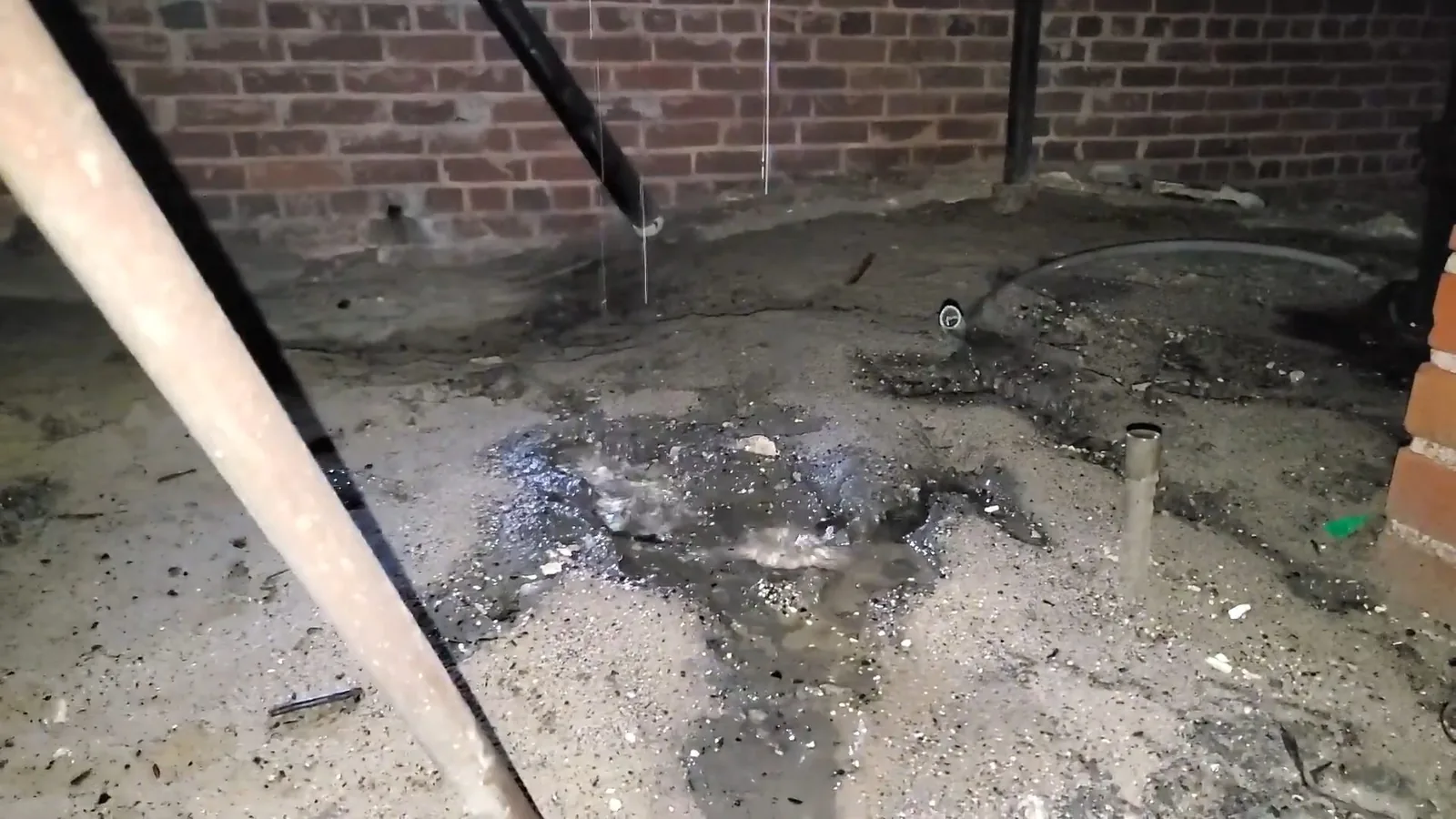
Groundwater, a plumbing leak or condensation: sorting out the source
Waterproofing treats water that comes from the ground. It does nothing for a leaking pipe, and a pipe leak left untreated ruins any waterproofing job. Spend ten minutes sorting the source before anyone quotes a fix.
| What you notice | What it usually points to | What to do |
|---|---|---|
| Water appears after rain or snowmelt and stops when it dries out | Groundwater pressing on the wall or floor | Waterproofing and exterior drainage |
| Water appears in dry weather, or the water meter moves with everything off | A plumbing leak | Have it located first, see tracing a plumbing leak |
| Cold pipes and walls are wet in humid weather, and the wetness wipes away | Condensation | Ventilation or dehumidification, not drains |
| Water rises in a floor drain, a tub or a toilet | A sewer or drain backup | Clear or repair the drain, not waterproofing |
If a floor drain gurgles or rises, the cause is in the pipes, not the soil. That belongs on the sewer side, and sewage coming through the floor drain is covered there.
Where water gets in: the floor joint, cracks, walls and window wells
Water follows the weakest path. In most basements that is one of a few places, and where it enters tells you which fix fits.
- The joint where the floor meets the wall. This seam is rarely sealed, so water pushed up from below shows here first.
- Cracks in a poured wall or the floor. Hairline cracks often seep slowly, while wider or growing cracks need a closer look.
- Mortar joints in a block wall. Block walls are hollow, and water can travel inside them and show up far from where it entered.
- Window wells. A well that fills with rain or has no working drain sends water straight through the window frame.
- Pipe and wire penetrations. Where lines pass through the wall, the opening around them can leak.
Take photographs when the water is present, not after it dries. A dry wall tells a plumber very little, and a photo of the damp pattern after a storm is the best evidence you can give.
Water getting in after storms or thaws? Describe where to a plumber.
Call (833) 571-0120Fix the outside first: gutters, downspouts and grading
Before interior work is planned, rule out the simple causes. Water that runs off a roof and drops beside the foundation has nowhere to go but down along the wall.
- Clean gutters and check that they are not overflowing at the corners.
- Extend downspouts so they discharge well away from the house, not at the foundation.
- Check that the soil slopes away from the walls, not toward them.
- Make sure window wells have covers and a working drain at the bottom.
- Look for places where a patio or walk has settled and now tips toward the house.
These steps cost little and can reduce or end the seepage in some basements. They do not cure water that comes up through the floor from high groundwater. If the water returns after you have fixed the outside, the problem is below the surface, and the interior work in the next section becomes the question.
Interior perimeter drains: what the work involves
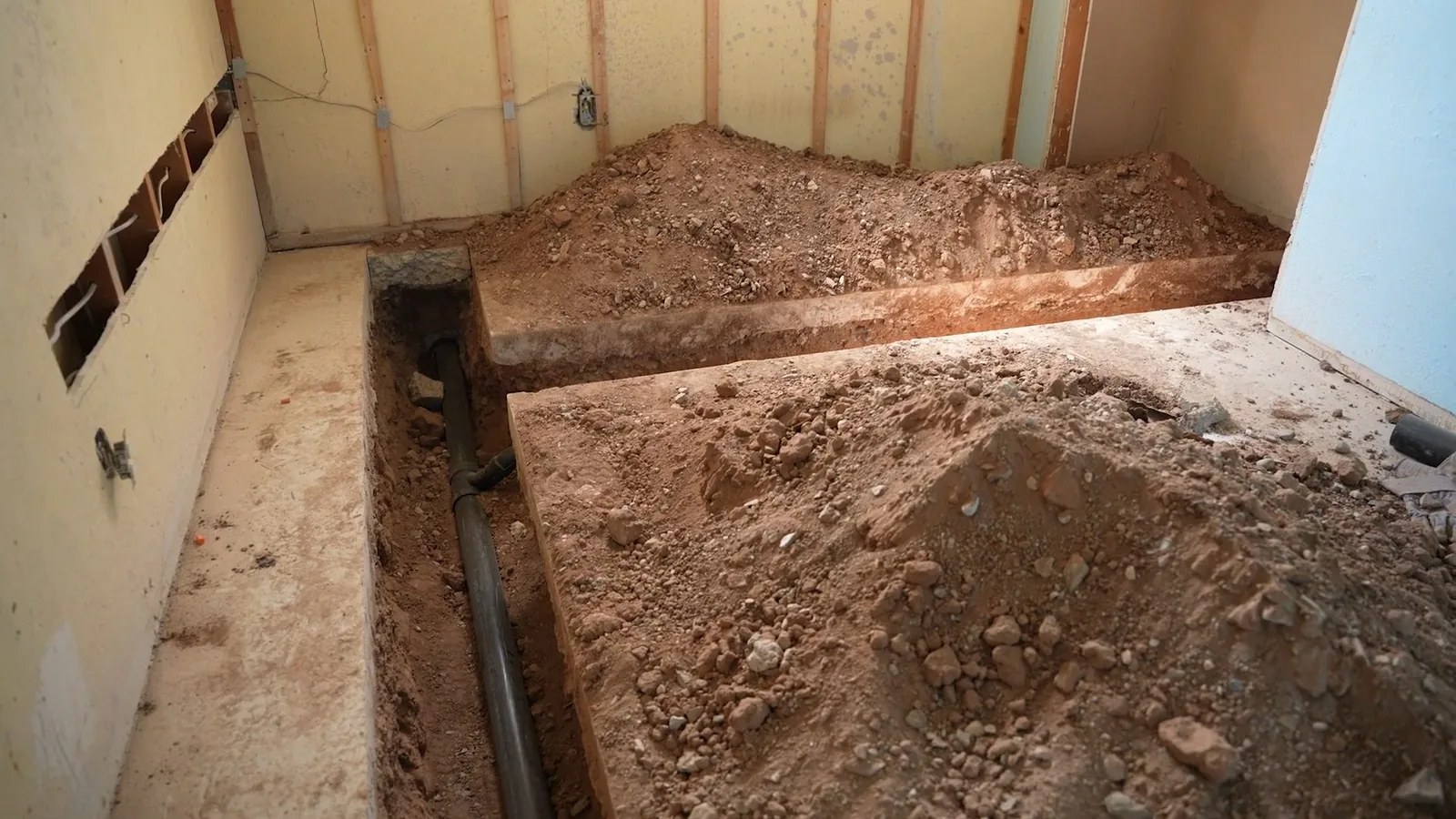
An interior drain system, often called an interior French drain, catches water at the floor edge before it spreads and sends it to a safe outlet. It is the most common answer for seepage that comes from the ground, because it works from the inside and does not require digging up the yard.
The work follows a clear sequence. A strip of floor is cut along the wall and removed. A trench is dug and lined, perforated drain pipe is laid in gravel and the concrete is patched over the top. The pipe is set at a slight slope so water moves toward the outlet.
- The floor edge is opened in sections, and the debris is hauled out.
- Gravel and perforated pipe go into the trench, usually with a filter fabric around them.
- New concrete is placed over the pipe and finished to match the floor.
- The system is tested with water before the job is called complete.
The question to settle first is where the collected water goes. Discharge rules are set locally, and what is allowed at your address is something to ask the City of Valparaiso utilities and the building department that covers it. Do not accept a plan that connects the drain to the household sewer unless you have confirmed it is allowed.
Basement wall vapor barriers: what they can and cannot do
A wall system is a sheet of dimpled plastic fastened to the inside of the foundation wall. Water that comes through the wall runs down behind the sheet and into the drain at the floor edge, so the wall stays dry on the surface. It manages water; it does not stop it from entering the wall.
Waterproof paint and sealers are different. They can help with minor dampness, but they cannot hold back water pressing on the wall from the other side. Paint over a leaking wall peels, and the water finds the next weak point.
Ask which treatment is proposed for each wall, and why. A good plan connects wall, floor joint and drain into one path for the water, not three separate fixes.
Cracks that mean structure, not water
Not every crack is a waterproofing issue. Some cracks show that the wall itself is moving, and that is a structural problem that drains will not fix.
Often a water problem
- Hairline vertical cracks that seep after rain
- Cracks at the floor and wall joint
- Damp patches with no visible movement
Ask a structural engineer
- A horizontal crack across a block wall
- Stair-step cracks following the mortar joints
- A wall that bows inward or a crack that widens over time
A plumber is not the right person to judge structure, and an honest one will say so. Take photos and measure the crack width now, then check again in a few weeks to see whether it has changed.
Permits, digging and utility locates
Interior drain work rarely needs digging in the yard, but any exterior excavation does. Indiana law requires a call to Indiana 811 at least two full working days before digging so that buried utility lines are marked, and a good contractor makes that call before the shovel goes in.
Permit rules are set locally. Indiana plumbing rules require a contractor to obtain a permit wherever a local ordinance calls for one, so ask the building department that covers your address what applies to drain work, and ask the contractor who pulls the permit and whether you will get a copy.
What a written waterproofing plan should answer
A real plan is specific to your basement. These are the points it should cover before work begins.
- Where is the water coming from, and how do you know?
- Which walls and floor areas are being treated, and which are not?
- Where does the collected water go, and who confirmed that is allowed?
- What are you doing about gutters, grading and window wells?
- How will the floor and walls be finished afterward?
- What does the work come with, in writing, and what voids it?
Prices are quoted after an inspection, because a figure given before anyone has seen the basement is a guess. If water has already soaked carpet, drywall or stored belongings, drying a wet basement is a separate job that can start while the waterproofing plan is being made.
Basement taking on water? Call and describe where it shows up and when.
Call (833) 571-0120Need basement waterproofing in Valparaiso?
Tell the plumber where the water appears, when it shows up and what the wall or floor looks like. You will get a plan for the source, and the price is quoted after an inspection.