
Water leak detection · Valparaiso, IN
Water Leak Detection Services in Valparaiso, IN: High Water Bills, Wet Walls and Meters That Keep Moving
A water bill that climbed for no reason, a ceiling stain that keeps coming back or a meter that spins when nobody is home all point to the same question: where is the water going? Finding a hidden leak is a search job, and the search should end with a spot on a plan, not a guess.
This page shows the check you can do yourself in a few minutes, the tools a plumber uses to locate a leak inside walls, floors and the yard, and the questions to settle before anyone cuts into drywall or digs up a lawn.
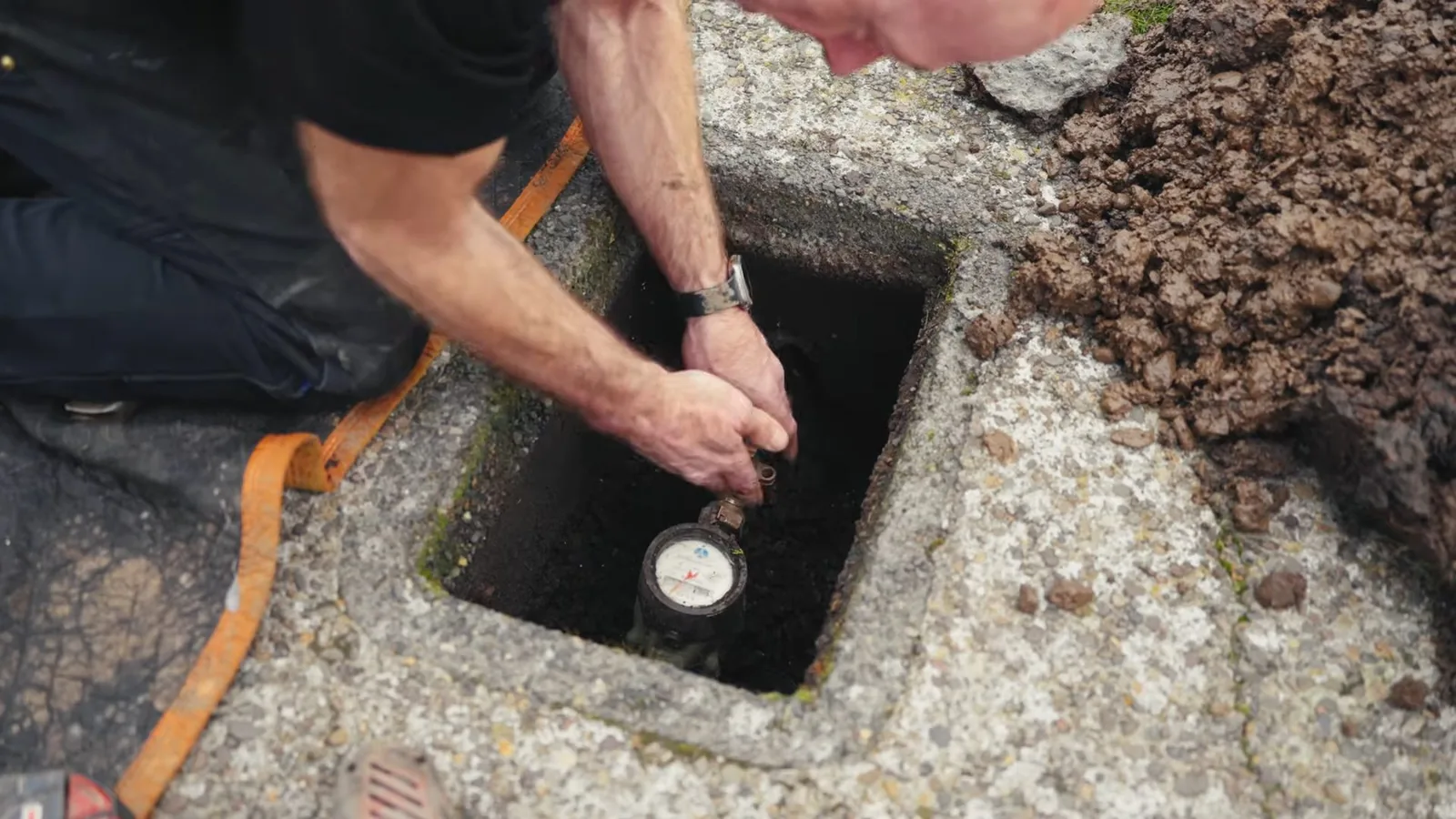
Start with the meter: is water leaving the house right now?
The water meter is the quickest honest witness you have. A short test tells you whether you have a leak at all, and roughly where it sits. Do it before you call, and tell the plumber what you saw.
- Turn off every fixture and appliance that uses water, including the ice maker and the washer. Check that nobody is running a shower or filling a tub.
- Find the meter and read the dial, or look for the small low-flow triangle or wheel that turns when even a trickle passes through.
- Wait fifteen minutes without using any water, then read it again. A moving indicator or a changed reading means water is leaving.
- Close the main shutoff valve where the line enters the house and look at the meter once more.
| What the meter does | What it usually means | Next step |
|---|---|---|
| Stops when the main valve is closed | The leak is inside the house, in a wall, a floor or a fixture | Check toilets and visible fixtures, then ask for a locate |
| Keeps moving with the main valve closed | The leak is on the line between the meter and the house | Ask your water utility which section is yours, then call a plumber |
| Does not move at all | Little or no leak right now | Look at the bill, the stain or the sound again before ruling it out |
A toilet that refills by itself is the most common silent leak in a house, so lift the tank lid and look before assuming something worse. If that is the cause, running toilet repair is the fix.
Meter still moving with the main closed? Describe it to a plumber.
Call (833) 571-0120Signs of a hidden leak before a stain shows up
Most leaks announce themselves quietly for weeks. The earlier you act, the less drywall, flooring and framing gets wet, and the smaller the repair.
- A water bill that rises with no change in how many people live in the house
- The sound of running water when every tap is off
- A warm patch on a floor, or a floor that feels soft or springy
- A musty smell in a closet, cabinet or basement corner
- Paint that bubbles or peels on a wall, or wallpaper that lifts at a seam
- Water pressure that fades at one fixture or across the house
- A green or unusually soggy patch in the yard when it has not rained
Ignoring a small leak is expensive in a slow way. Water that stays in a wall feeds mold, rots framing and loosens finishes. Once it has soaked in, drying and cleanup after the leak becomes a second job on top of the plumbing repair.
Ceiling, wall and behind-the-wall leaks
A stain on a ceiling is where the water showed up, which is often not where it started. Water runs along framing and pipes before it drops, so the source can sit several feet away, one floor up or outside the house entirely.
The first question a plumber asks is when the stain grows. The answer separates two different problems.
Points to plumbing
- The stain grows with no rain at all
- It grows after a shower, a flush or a dishwasher cycle
- A wall near a bathroom, kitchen or laundry is damp
- The meter moves when everything is off
Points to the roof or gutters
- The stain only appears during or after rain or snowmelt
- It sits below an exterior wall, a chimney or an eave
- Gutters overflow or ice builds along the roof edge
- The meter does not move
Roof and gutter leaks are found by tracing the water path and testing one possibility at a time. A plumber can rule plumbing in or out, and then you know whether the next call goes to a roofer. If the plumbing is the cause, a pipe in the wall is opened only at the spot the tools point to.
Stain on a ceiling or wall? Tell a plumber when it grows.
Call (833) 571-0120How hidden leaks are located without tearing the house apart
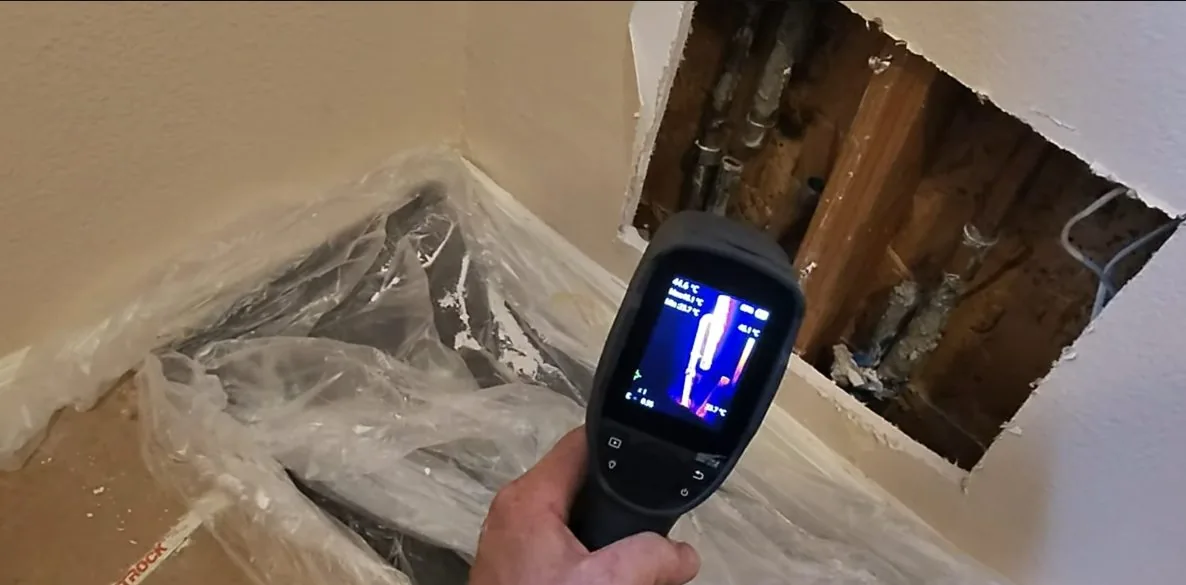
Modern leak location uses several methods, because no single tool works on every pipe and every surface. A plumber picks the mix that fits the symptom and confirms one method with another before marking a spot.
| Method | What it picks up | Where it falls short |
|---|---|---|
| Acoustic listening | The hiss or drip of pressurized water in a pipe | Hard to use on noisy pipes or plastic lines |
| Thermal imaging | Cooler or warmer areas where moisture changes the surface temperature | Needs a temperature difference and does not see through a thick floor |
| Electronic moisture meters | Moisture content in drywall, wood and flooring | Shows where it is wet, not always where it began |
| Pressure testing | Whether a section of pipe holds pressure when isolated | Tells you a leak exists in that section, not the exact spot |
| Tracer gas | A harmless gas mix pushed into a drained line escapes at the leak and is sniffed at the surface | Takes setup time and suits difficult cases |
A plumber should tell you which method found what, and what confirmed it. Marking the spot on the wall or floor with tape before cutting keeps the opening small.
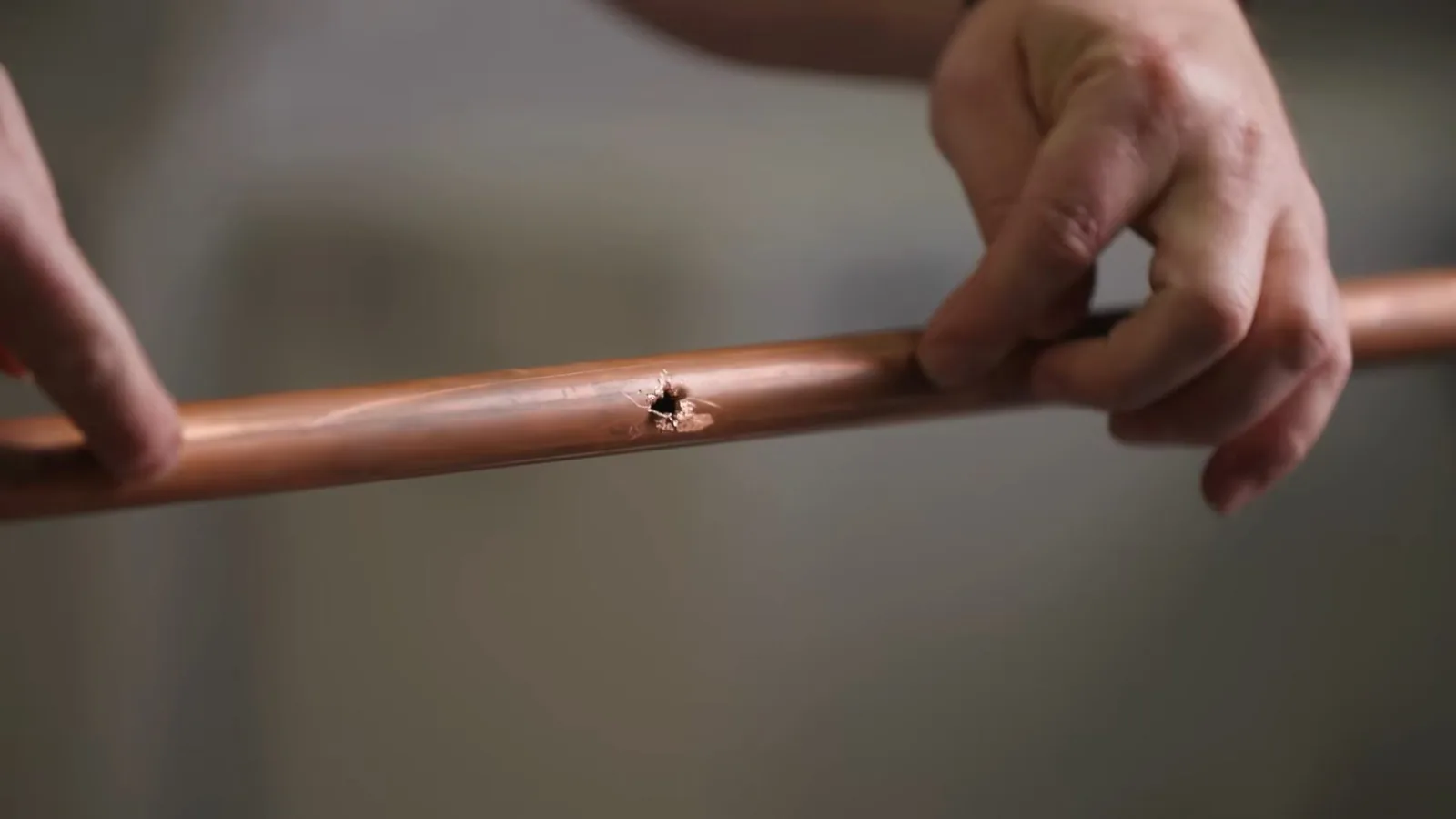
Copper pinhole leaks and what several of them mean
A pinhole leak is a tiny hole worn through the wall of a copper pipe from the inside. It can spray a fine jet at a wall or ceiling, and it does damage far out of proportion to its size.
One pinhole in an otherwise sound system can be cut out and repaired. A second and third within a few years, in different parts of the house, say something about the pipe, not about bad luck. When that happens, the useful conversation is about replacing the pipes and about what is in your water, not another patch.
Ask your plumber to show you the failed section after it is cut out. The inside surface tells a story that the outside does not.
Basement, yard and service line leaks
Water in a basement is not always a plumbing leak. The way to tell is the pattern. Plumbing leaks keep running whatever the weather, while groundwater seepage follows rain and thaw. If the water only shows up after storms, the answer lies in keeping groundwater out of the basement, not in finding a pipe.
Outdoors, the signs are a strip of lawn that stays green or soggy in a straight line, a low spot that fills when it has not rained, or a meter that moves with the main valve closed. That last test puts the leak between the meter and the house.
Before anyone digs to repair a buried line, Indiana law requires a call to Indiana 811 at least two full working days ahead so utility lines are marked. Ask the City of Valparaiso utilities which section of the service line is yours, because the answer decides who handles the repair.
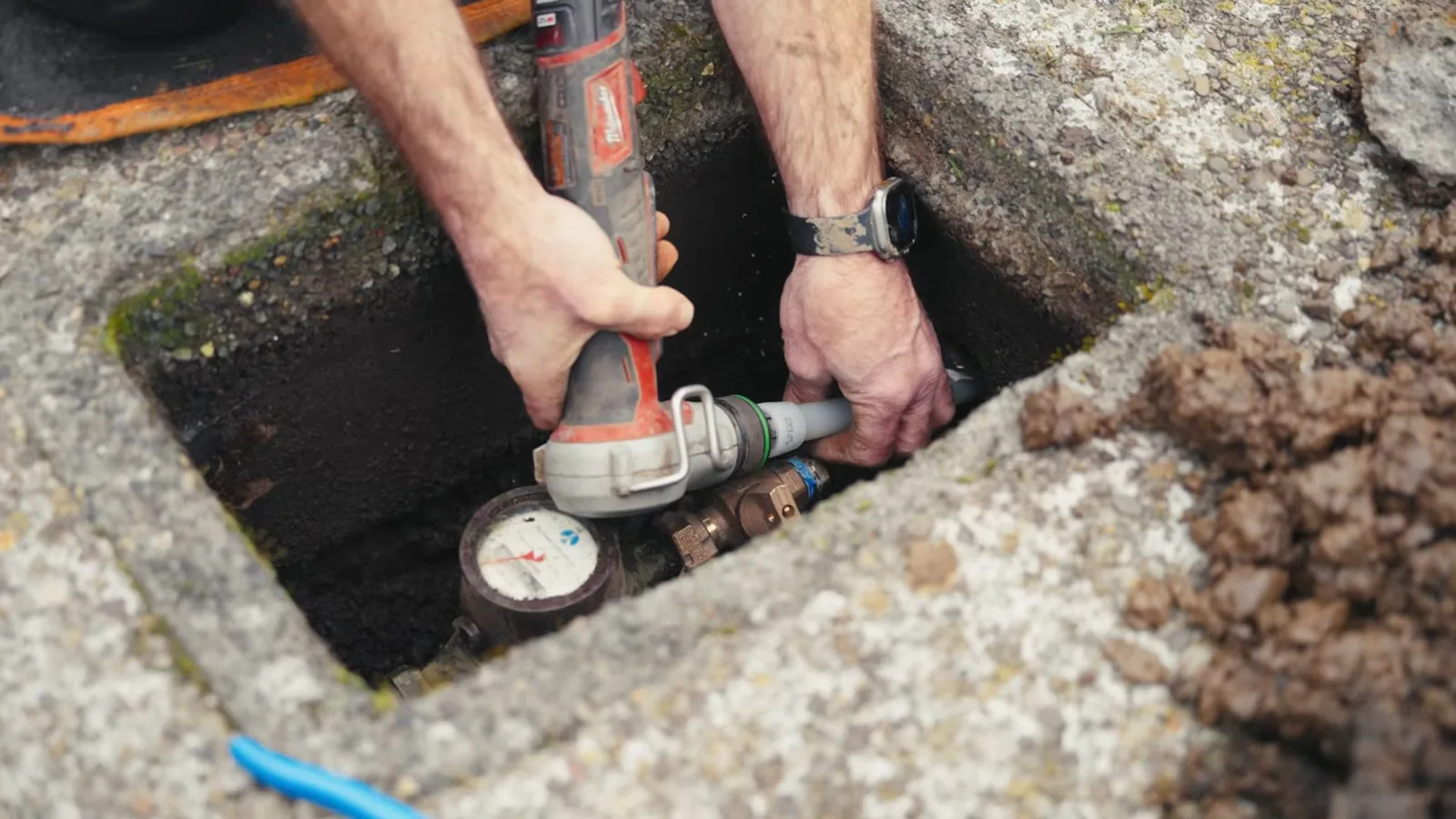
Wet lawn or a meter that keeps moving? Tell a plumber what you see.
Call (833) 571-0120Pool, spa, sprinkler and commercial leaks
Pools, spas and irrigation systems leak for the same reasons as house plumbing, and they are found the same way: isolate a section, watch what changes and narrow it down.
For a pool, the bucket test compares how fast the pool drops against a bucket of water set on a step. A pool that drops faster than the bucket is losing water to a leak, not just to evaporation. For a sprinkler system, a zone that stays wet, a head that keeps weeping or a lawn patch that sinks after watering points to a broken line or fitting in that zone.
In a shop, a restaurant or an apartment building, tell the plumber what the building contains and whether the meter serves one unit or several. A leak that drains tenant water into a shared wall needs a plan for access, notice and cleanup before the first tool comes out.
A gas smell is a different emergency
Water leak detection is not the right response to the smell of gas. If you smell gas, leave the building right away and call the gas utility or 911 from outside. Do not turn lights or appliances on or off, and do not look for the leak yourself.
Once the utility has made the home safe, a plumber can test the gas piping and repair what failed. That work is covered under repairing gas piping.
Gas leaks are located with tools made for gas: a handheld electronic detector that senses gas in the air, a bubble solution brushed on joints and a gauge that shows whether isolated piping holds pressure. No flame is ever used, and the same methods confirm the repair afterward.
Questions to settle before a wall is opened
Leak location should end with a plain explanation. These questions keep the work small and the bill tied to what was found.
- Which method found the leak, and which method confirmed it?
- Where exactly is it, and how large an opening will you need?
- Can you show me the reading, the image or the pressure drop that points there?
- Is the leak in a fixture, a pipe in the wall or the line under the yard?
- Once it is located, who repairs it, and how is the opening patched?
Leaks at a faucet, a supply line or a fixture are fixed on the spot, as with a dripping faucet or supply line. A sudden break is a different job, covered under a sudden pipe break. Prices are quoted after the leak is located, so the figure reflects the actual work.
Ready to have a leak located? Call and describe what you have noticed.
Call (833) 571-0120Need leak detection in Valparaiso?
Tell the plumber what you see, what the meter did during the test and where the water shows up. You will get a plan for locating the leak, and the price is quoted after diagnosis.