
Whole-house repiping · Valparaiso, IN
Whole-House Repiping in Valparaiso, IN: Galvanized, Copper and PEX Replacement Decisions
One pinhole leak is a repair. A second one in a different room, brown water in the morning and weak flow at the shower are a pattern, and the pattern usually belongs to the pipes themselves. Repiping replaces the supply lines through the house so you stop paying for the same problem one fitting at a time.
This page covers how to tell whether repiping is the right move, how to identify what is in your walls, how PEX and copper compare and what the job does to a house you are living in.
Repiping or another repair: how to tell when the pipes are the problem
A single failure does not call for a new set of pipes. A pattern of failures does. The question is whether the next leak will be a repeat of the last one.
Keep repairing when
- One leak in a pipe that is otherwise sound
- A failed fitting, valve or connector
- Damage from a cause that has been fixed, such as one hard freeze
- Newer pipe with a known isolated defect
Repiping becomes the better question
- Pinhole leaks in more than one place within a few years
- Rusty or brown water that returns after flushing
- Low pressure at several fixtures that cleaning does not fix
- Old galvanized steel or other pipe that is failing along its length
If you are chasing a single leak you cannot find, start with pinpointing pinhole leaks and fix that one first. If the pipe failed once because of a freeze, repairing a single failed pipe and adding insulation may be all you need.
What are your pipes made of?
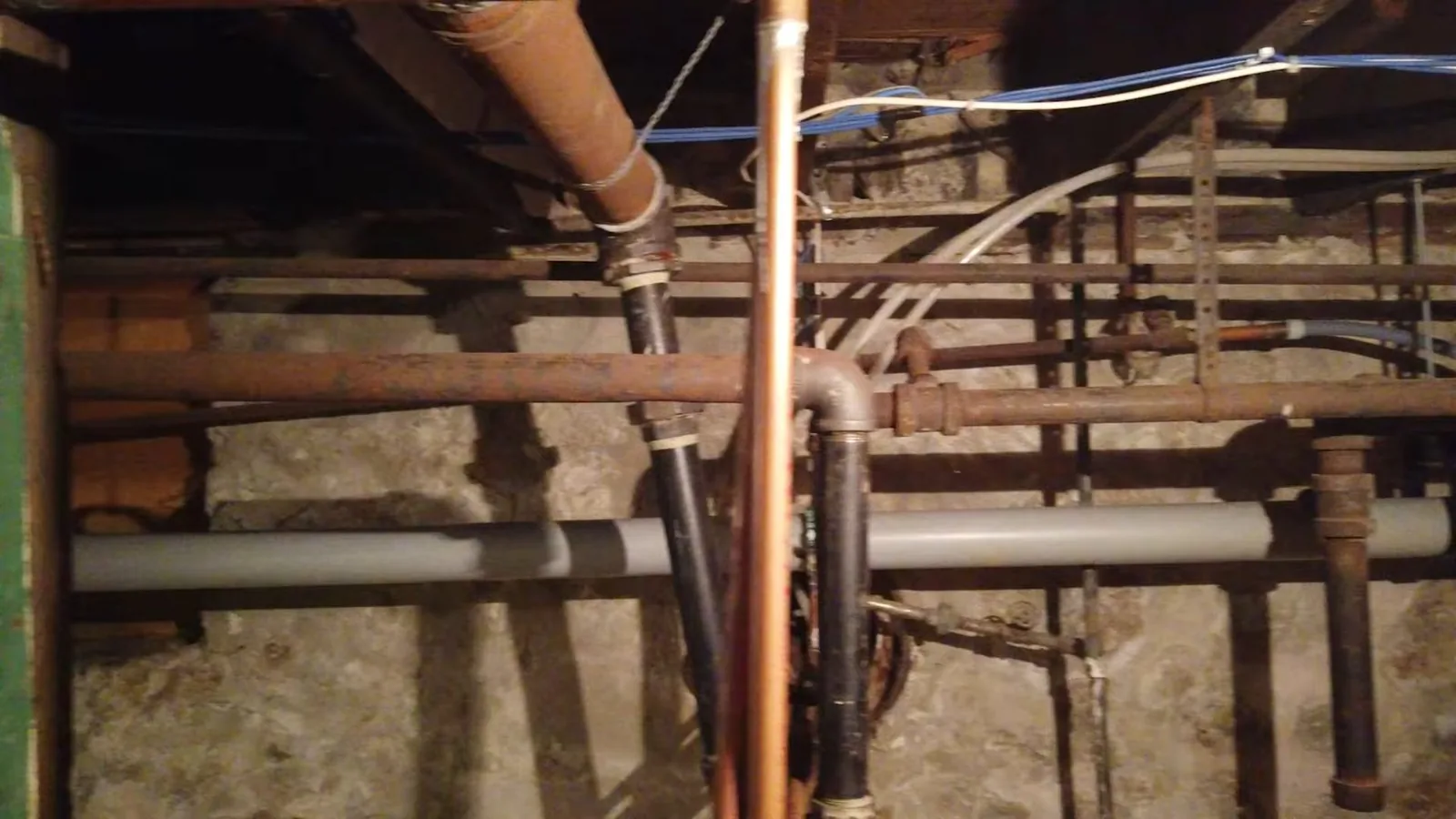
Knowing the material is the first step, because it decides how long the pipes have left. You can check the main lines in a basement or utility area without tools beyond a magnet and a flashlight.
| Material | How to recognize it | What to watch for |
|---|---|---|
| Galvanized steel | Gray, threaded and magnetic, with joints that look rough | Rust inside, shrinking flow and brown water |
| Copper | Orange brown or green, soldered joints, not magnetic | Pinholes and green stains at joints |
| PEX | Flexible plastic tubing, often red, blue or white | Generally sound, check fittings and exposure to sunlight |
| Gray plastic of unknown type | Flexible gray tubing with markings you cannot read | Ask the plumber to identify it before you decide |
If your home has galvanized pipe, ask whether it is the whole house or only part of it. A mixed system, where one section was replaced years ago, changes the plan. Tell the plumber what the age of the house is, and what you know about earlier plumbing work.
Signs the pipes are failing from the inside
Pipes rarely fail without warning. They usually tell you in the water first.
- Water that runs brown or orange when you have not used a tap for a while
- A metallic taste or smell that does not clear
- Pressure that is fine at the street but weak at upstairs fixtures
- Stains on ceilings or walls that return after repair
- Pinhole leaks, or green crust at copper joints
- Pipes that bang, or fittings that weep when the system is under load
These signs can have other explanations, such as a closed valve, a clogged aerator or a water heater issue. A plumber should rule those out before recommending a whole-house job, and should be able to point to the section of pipe that shows the problem.
Not sure if your pipes are the problem? Describe what you notice to a plumber.
Call (833) 571-0120PEX or copper: how to choose for the replacement
Both materials are used for supply lines. The choice depends on your house, your walls and what the plumber and your local code accept.
| PEX | Copper | |
|---|---|---|
| How it goes in | Flexible, so it snakes through walls with fewer openings | Rigid, needs more cuts and more joints |
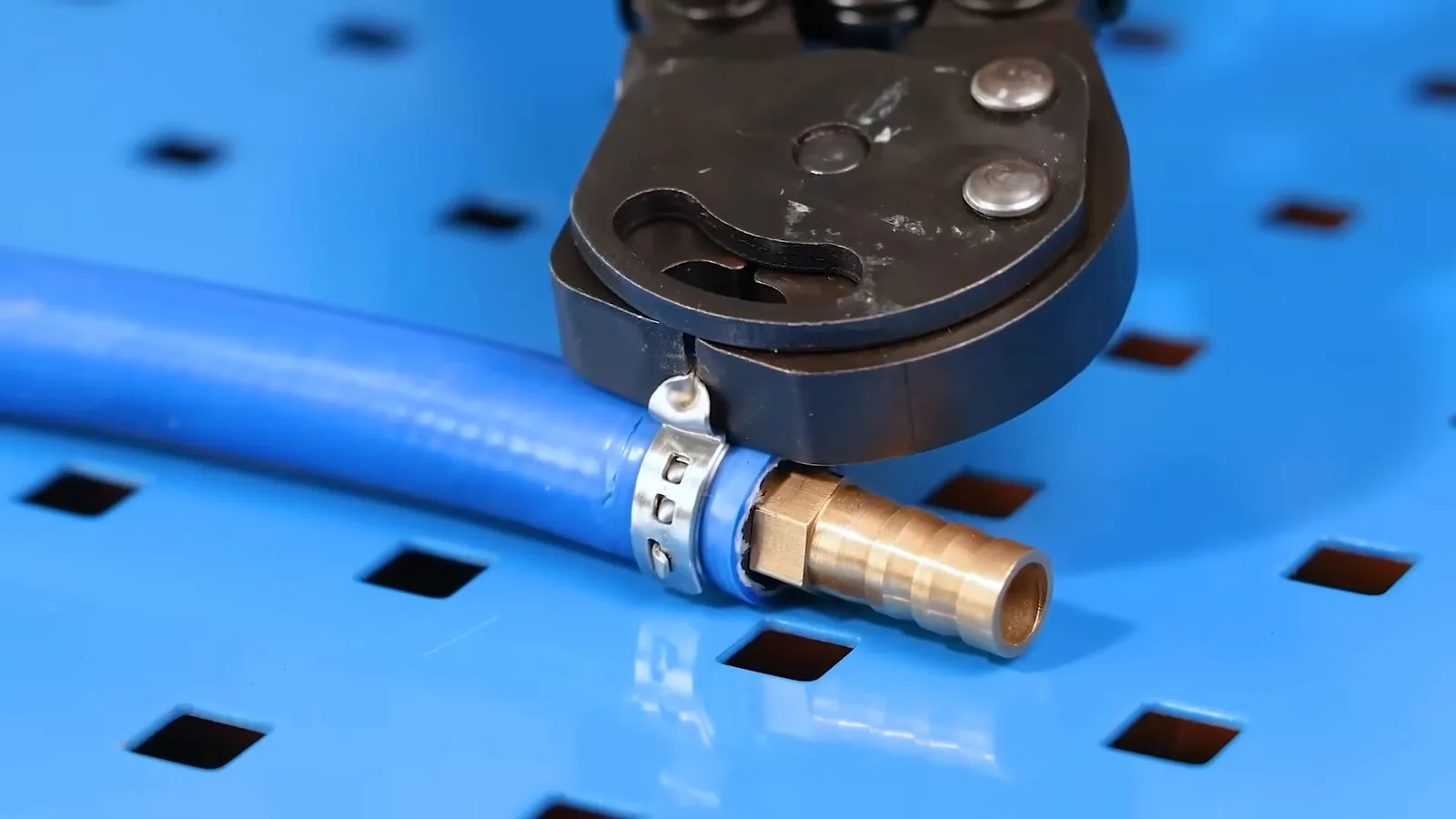
| Joints | Fewer fittings, made with crimp or expansion rings | Soldered at every turn and connection |
| Freeze behavior | More tolerant of freezing than rigid pipe, though not immune | Splits when the water inside freezes |
| Where it should not go | Outdoors in direct sunlight, or touching hot surfaces | Areas with water that eats copper from the inside |
| Questions to ask | Which fittings and which manufacturer, and what is warranted | What solder, what wall thickness, and why this over PEX |
Whichever material is proposed, ask which one local code accepts for your address and why this one fits your house. PEX is the usual choice for a whole-house replacement because it can be run through finished walls with smaller openings. A plumber who recommends it should still explain why, and what the alternatives were.
What a repiping project looks like in an occupied house
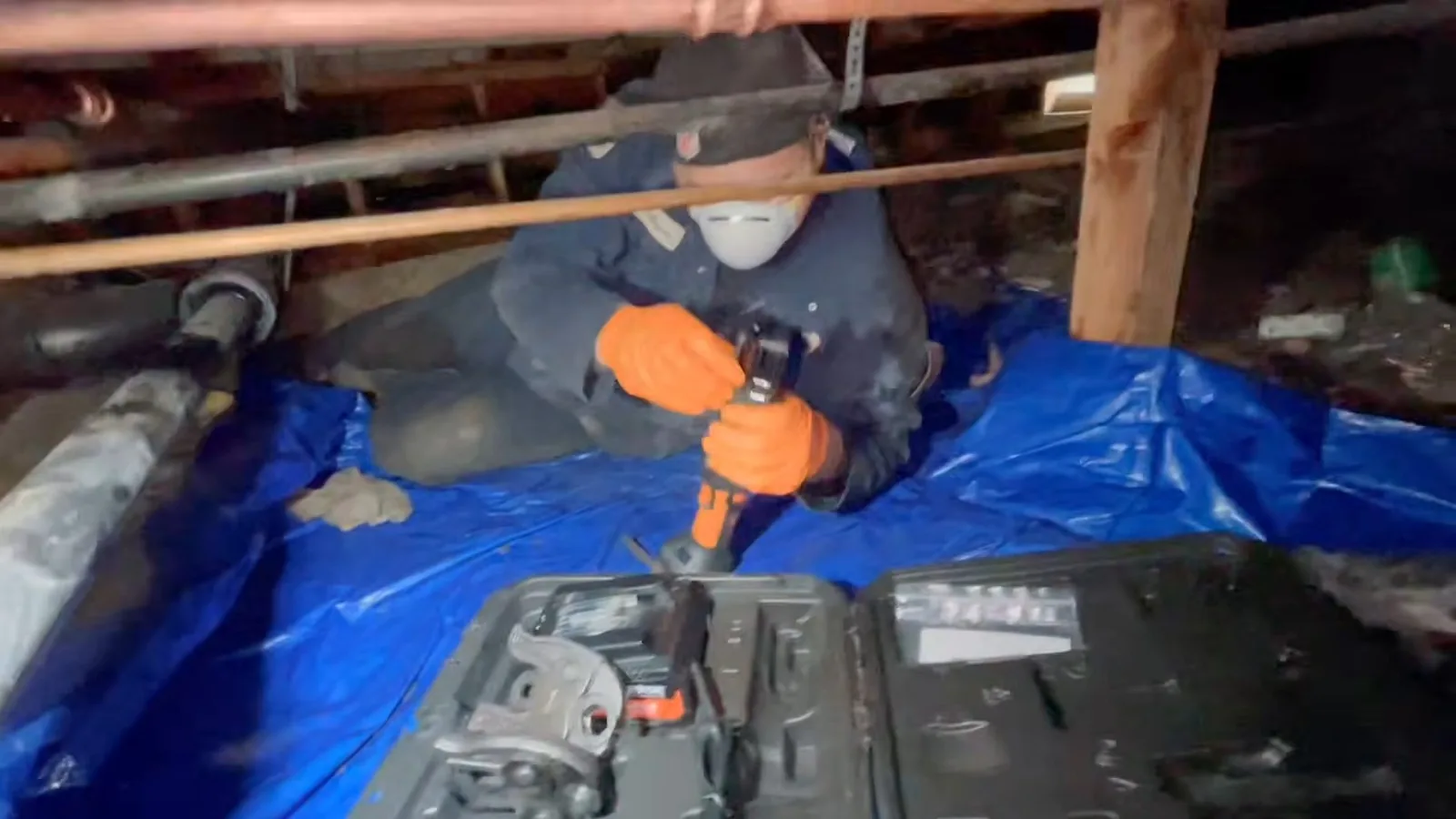
Repiping is a project, not a repair visit. Knowing what the days look like lets you plan around them.
- The plumber walks the house, traces the existing lines and plans the new routes, usually from the basement or utility area upward.
- The water is shut off while old lines are cut and new lines connected. Ask how long it will be off each day.
- Small access holes are cut in walls and ceilings where the pipe has to pass. Ask where, and how many.
- New lines are connected to fixtures, tested under pressure and checked for leaks before anything is closed.
- Openings are patched. Ask who does the drywall and paint, because it is often a separate trade.
Ask whether the work can be done in sections so that you keep running water at night, and whether the water heater connections are included in the scope. If the heater is old, it can make sense to look at replacing the heater at the same time while the pipes are open.
Repiping one floor, one branch or the whole house
Replacing every pipe is not always the answer. Some homes need only one section, and the cost of the rest is wasted if the remaining pipe is sound.
- One floor or one branch: when only a bathroom group or a kitchen line has failed.
- The main trunk line: when the pipe from the meter to the manifold is the weak point.
- The whole system: when the material itself is at the end of its life and failures are scattered.
Ask the plumber to mark on a sketch which runs are being replaced and which are left, and why. A plan that leaves a section of old galvanized in place connected to new PEX can undo part of the benefit, because rust and scale from the old pipe still flows into the new.
Hard water, old pipes and what to ask the utility
Valparaiso's tap water comes from 16 groundwater wells in three wellfields, according to the Indiana Department of Environmental Management. Water drawn from the ground carries dissolved minerals, and over many years those minerals build up as scale inside older steel pipes and narrow the opening.
That is one reason an old galvanized system loses flow even when it does not leak. Ask the City of Valparaiso water utility for the water quality report that covers your address, and bring it to the conversation. It tells you what flows through the new pipes as well as the old.
If hardness is a recurring problem, a softener may belong in the plan. See treating the water after repiping for the questions to ask, and do not size one from a guess.
Permits, inspection and leak testing
Permit rules for plumbing work are set locally. Indiana plumbing rules require a contractor to obtain a permit wherever a local ordinance calls for one, so ask the building department that covers your address whether repiping needs a permit and an inspection.
Then ask the plumber who pulls it, whether an inspection happens before the walls are closed and how pressure testing is done. Take photographs of the new lines before they are covered.
What to get in writing before the pipes come out
A repipe is large enough to deserve a written plan. Ask for these items before you agree.
- The material for supply lines and fittings, and where each is used
- Which fixtures, valves and the water heater connections are included
- How many days the work takes and how many hours the water is off each day
- Where the walls and ceilings will be opened, and who closes and paints them
- Whether a permit and inspection are part of the job and who handles them
- What the work and the materials come with, in writing
Prices are quoted after the plumber has traced the system and seen your walls, because a figure given over the phone is a guess about a house nobody has looked at. If an earlier leak soaked drywall or flooring, drying wet walls after a failure is a separate job that should be done before new pipes are closed up.
Thinking about repiping? Call and tell a plumber what your pipes have been doing.
Call (833) 571-0120Need whole-house repiping in Valparaiso?
Tell the plumber what the pipes are made of, where they have leaked and what the water looks like. You will get a straight answer on repair or replacement, and the price is quoted after diagnosis.