
Water heater repair · Valparaiso, IN
Water Heater Repair in Valparaiso, IN: Leaking Tank, Cold Showers and Strange Noises
There is water on the floor around your heater, or the shower ran cold halfway through. Those are common problems, and they are not the same problem. This page helps you tell a failing part from a failing tank, shut things off safely and decide whether a repair is worth paying for.
If the tank itself is leaking, or water is moving toward electrical equipment, call now. Our plumbers repair existing gas and electric tank heaters in Valparaiso, and they will say plainly when replacement is the better choice.
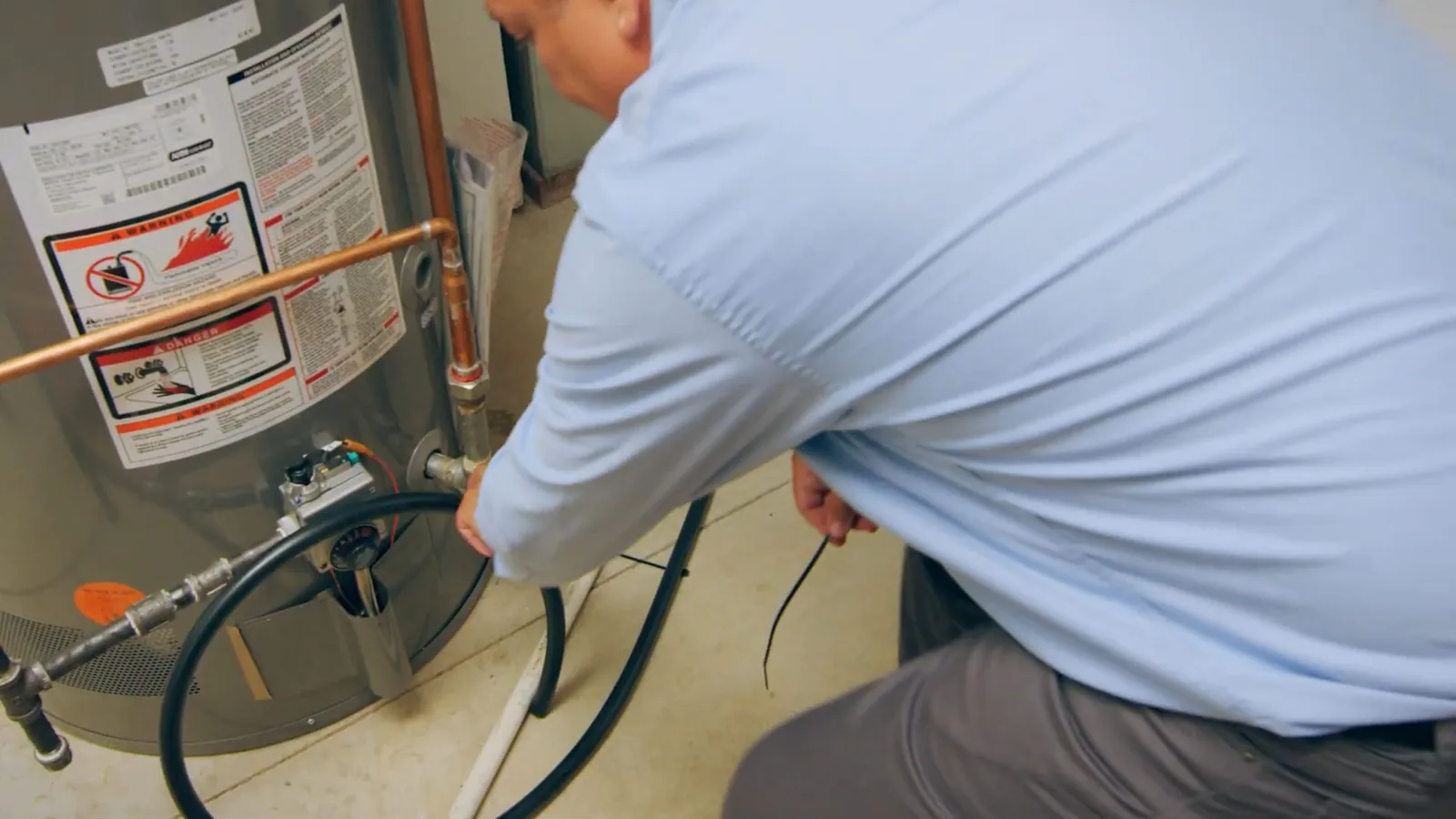
Is the puddle really coming from the water heater?
Water near a heater is not always the heater. Condensation on cold pipes, a dripping fitting on the supply line and a leaking washing machine hose can all end up on the same floor. Dry the area, lay down cardboard or paper towels and look again in an hour.
Where the water starts tells you what you are dealing with.
- Water at the top, around the pipe connections: usually a fitting or a valve, which is often repairable.
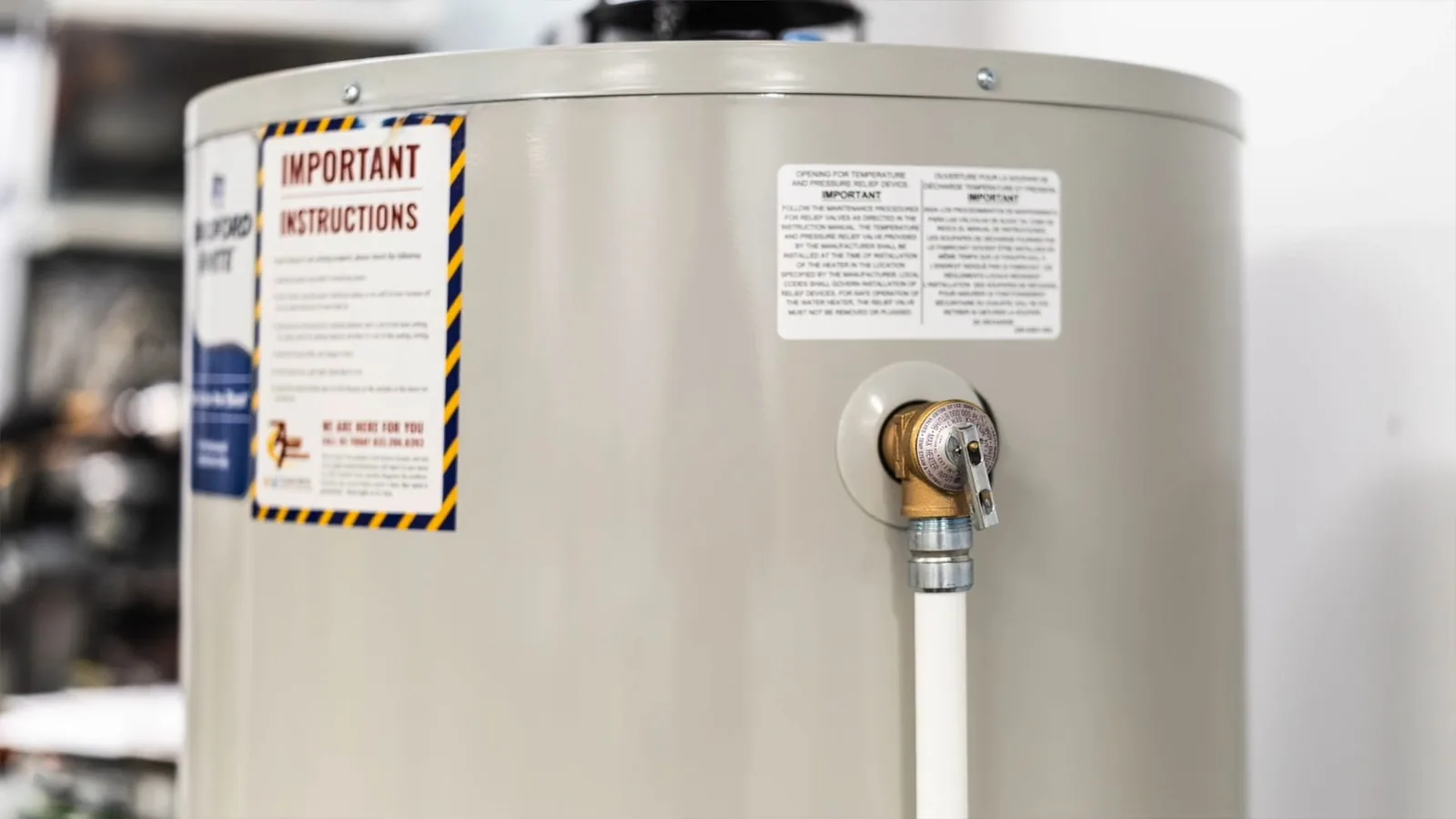
- Water running from the discharge pipe on the side: the temperature and pressure relief valve is opening, which points to heat or pressure that a plumber should look at.
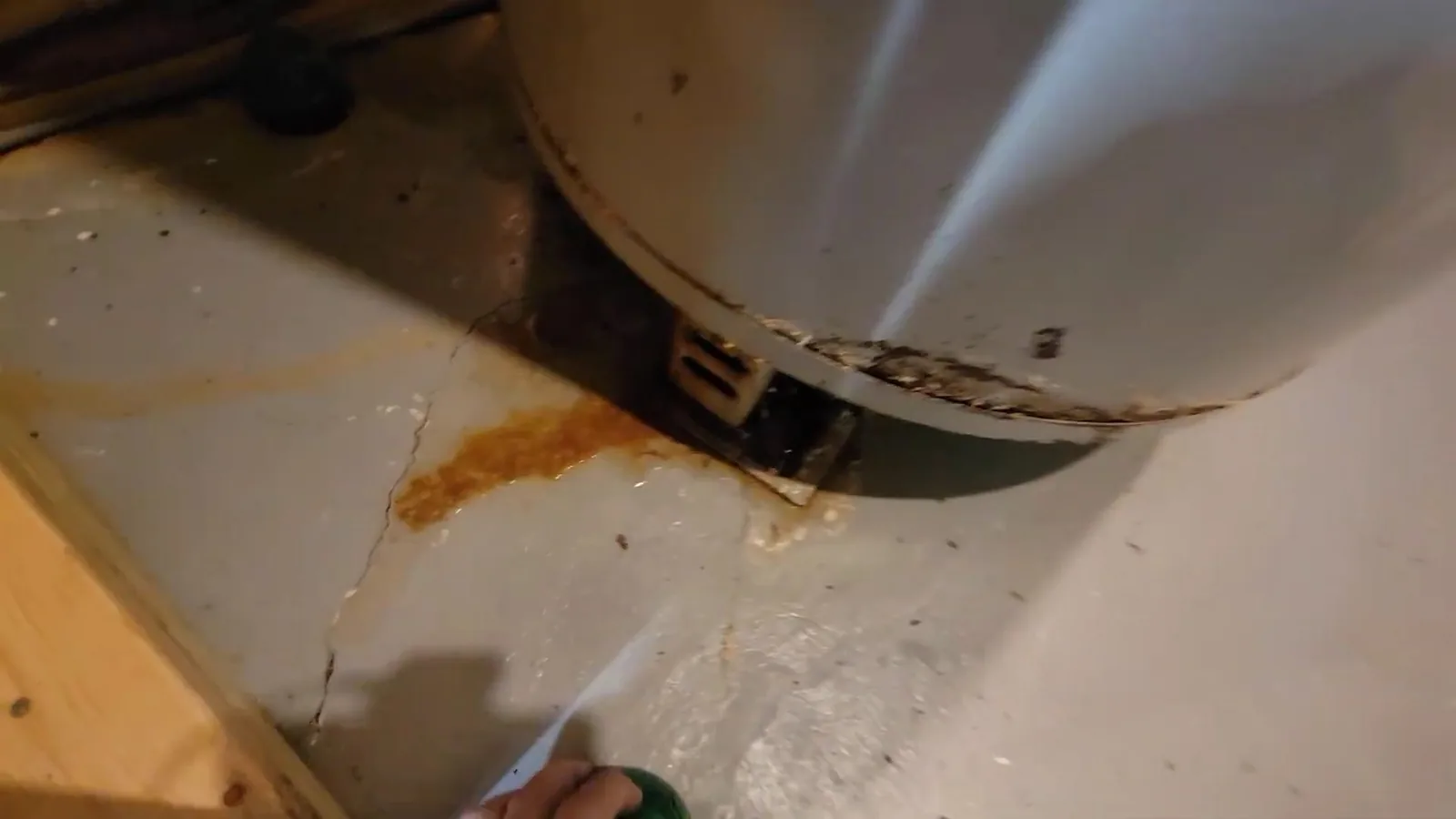
- Water coming from the bottom or the tank seams: the tank has most likely corroded through.
- Dampness only after long, hot showers: condensation, which can happen on some gas units and is not a leak.
A leak from the tank body cannot be patched. Rust inside has eaten through the steel, and the fix is a new tank. That is why the first job on any leak call is finding exactly where the water starts.
Shut it down safely while you wait for a plumber
These steps are safe for any homeowner and limit the damage. Stop at the end of the list. Anything beyond it is plumber work.
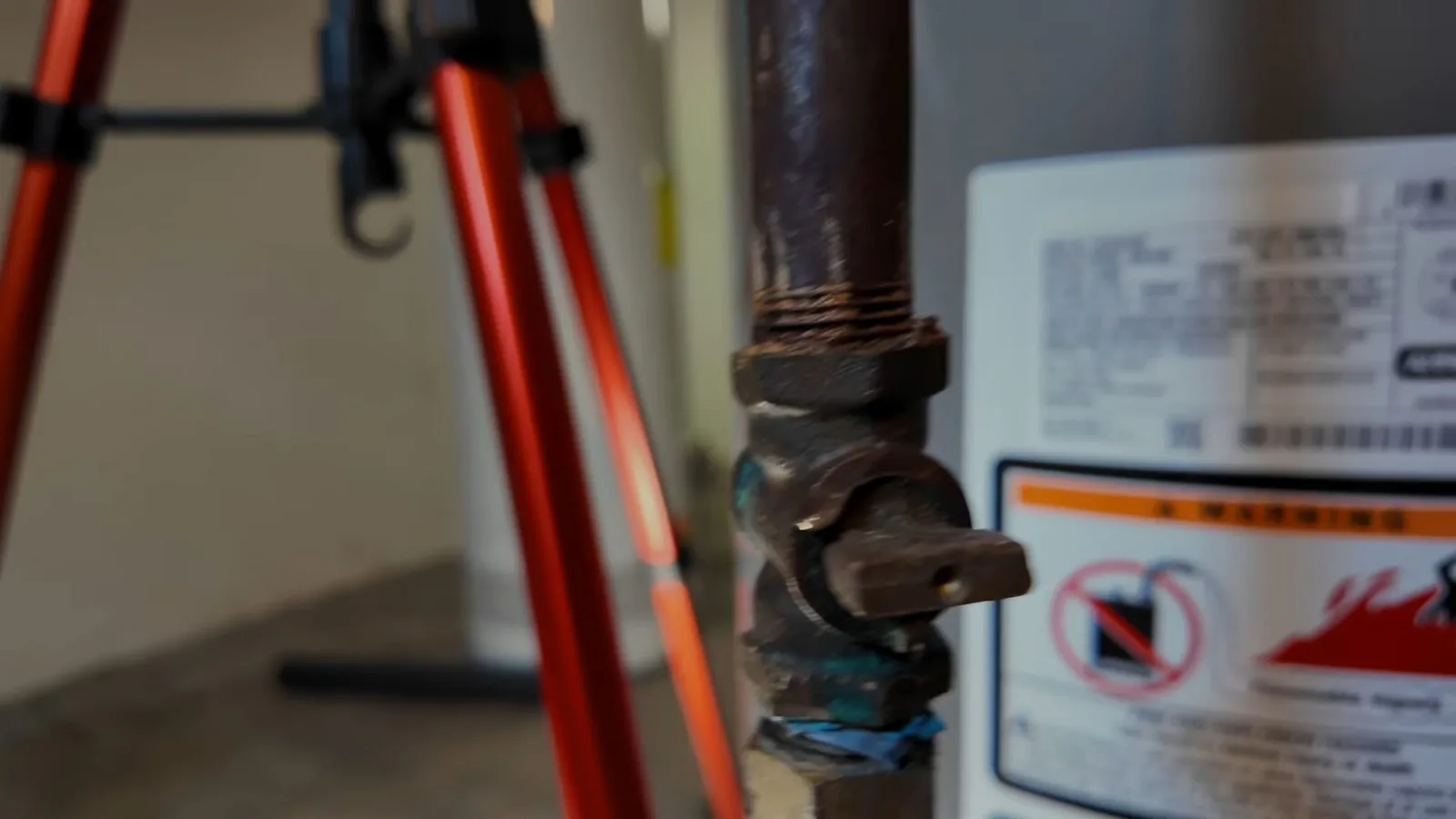
- Close the cold water supply valve on the pipe above the heater by turning the handle clockwise. That stops the tank from refilling and the leak from growing.
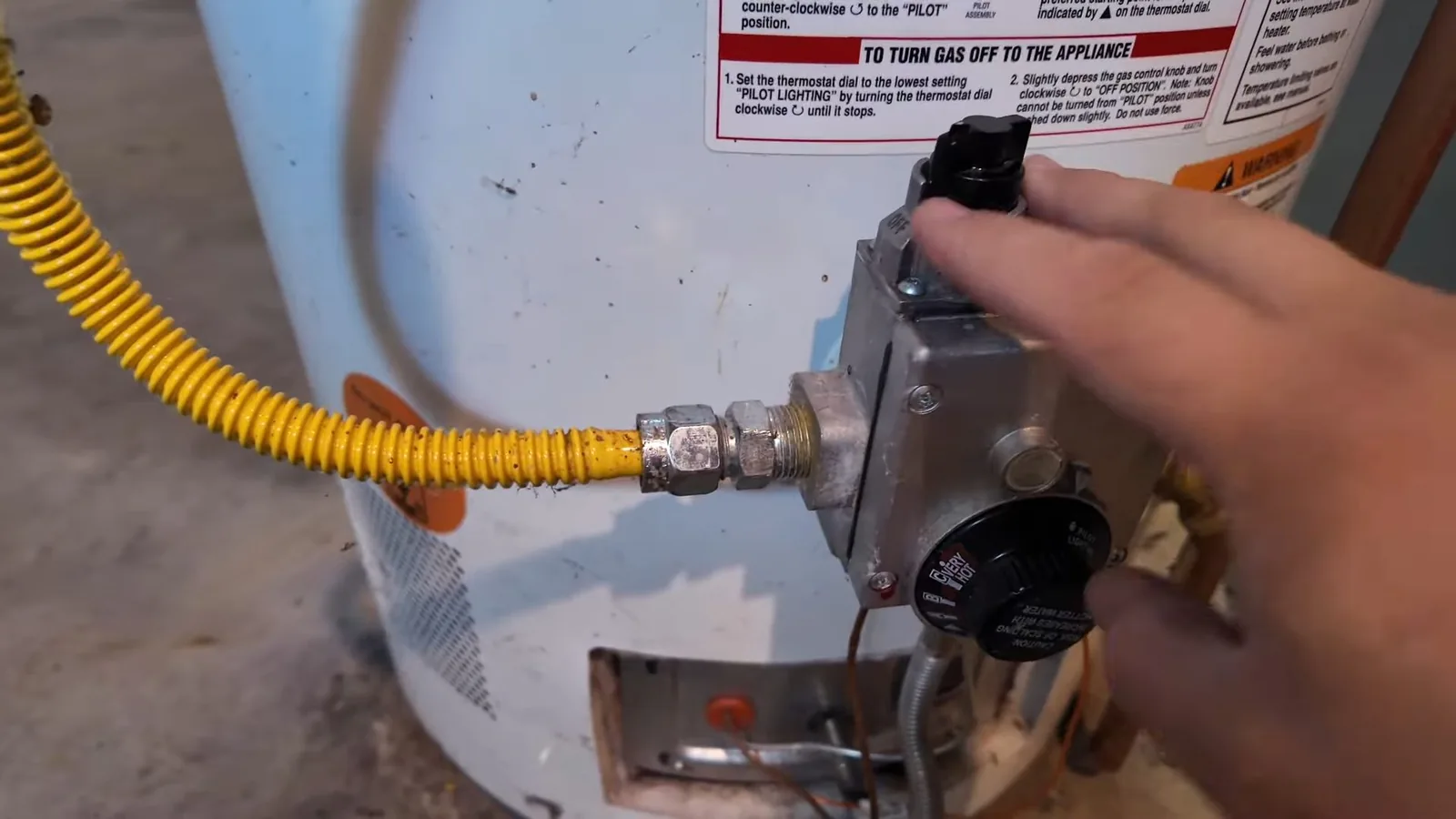
- On an electric heater, switch off its breaker. On a gas heater, set the gas control to the off or pilot position marked on the control.
- If you smell gas, do not touch switches or appliances. Leave the house and call the gas utility or 911 from outside.
- Do not open the tank's drain valve to empty it. The water can scald, and a hose running to the wrong place makes the mess worse.
- Move boxes and furniture off the floor and take photos of the damage for your records.
Opening panels, relighting a pilot that keeps going out and working on the vent pipe are not do-it-yourself jobs. A gas smell is a utility and emergency-services call, never a repair task.
Tank leaking and the valve will not close? Talk to a plumber now.
Call (833) 571-0120No hot water or lukewarm water: what each failure usually means
The symptom narrows the list of causes before anyone opens the heater. Use this table to get the right words for the phone call. It is a guide, not a diagnosis.
| What you notice | Likely cause | What a plumber checks |
|---|---|---|
| No hot water, gas heater | Pilot out, failing thermocouple or igniter, gas control problem | Flame sensing, gas supply and venting |
| No hot water, electric heater | Tripped breaker, failed heating element or thermostat | Power, element resistance and the thermostat's high-limit reset |
| Warm but never hot | One element failed on an electric heater, sediment or a low thermostat setting | Both elements, thermostat setting and the dip tube |
| Hot water runs out fast | Sediment buildup, a broken dip tube or a heater too small for the household | Sediment depth, dip tube and your daily use |
| Rusty or smelly hot water | A worn anode rod or corrosion inside the tank | Anode rod condition and the tank's interior |
| Popping or rumbling | Hardened sediment on the bottom of the tank | Whether a flush is likely to help or to cause a leak |
Electric elements and thermostats are inexpensive parts and a common repair. A failed tank is not. The point of a diagnosis is to tell which one you have before you commit to either.
Why tanks here rumble and run short: mineral buildup from well water
Valparaiso's city water comes from 16 groundwater wells in three wellfields, according to the Indiana Department of Environmental Management. Water pulled from the ground carries dissolved minerals, and those minerals settle out as sediment on the bottom of a tank water heater.
That sediment is the usual reason for popping and rumbling. It also insulates the water from the burner or element, so you pay to heat the tank and get less hot water out of it. On an electric heater it can bury the lower element and burn it out.
A flush can clear loose sediment. On an older tank with hardened scale, disturbing it sometimes starts a leak that the scale had been plugging. Ask the plumber whether a flush is worth trying on your tank before you agree to one.
Ask the city water utility for the hardness at your address. That number tells you how fast sediment is likely to return, and it sets the size of a softening system if you decide to add one.
What to ask before you approve a water heater repair
A fair repair conversation has specific answers. Ask these questions on the phone and again when the plumber is at the heater.
- Where exactly is the failure, and can you show me?
- How old is the heater? The rating plate carries a date code the plumber can read to you.
- What part is failing, what does the repair involve and what stands behind the work?
- Does this repair fix the cause, such as sediment or pressure, or only the symptom?
- If I replace instead, what size and fuel type do you recommend, and why?
Prices are quoted after the diagnosis, not guessed over the phone. If the answer to the cause question is "the tank," the next conversation is about replacement, and the new tank installation page explains what that involves.
Repair or replace: where the line usually falls
There is no single age or price at which a heater should go. These patterns help you decide.
Repair usually makes sense
- A failed element or thermostat on an otherwise clean tank
- A bad igniter, thermocouple or gas control
- A leaking fitting, drain valve or relief valve
- A tank with no leaks and little corrosion
Replacement usually makes more sense
- Water leaking from the tank body or seams
- Heavy rust at the bottom or in the hot water
- Repairs that keep returning within months
- A heater well past the age its maker designs it for
If you are weighing a tankless unit instead of another tank, that is its own decision with its own requirements, covered on the tankless water heater page.
When a leaking water heater cannot wait
Some situations call for an immediate call. Others can wait for a scheduled visit once the water is off.
Do not wait on these
- Water leaking steadily from the tank body
- Water spreading toward a panel, outlet or furnace
- Scalding water or steam from the relief valve discharge
- Loud hissing, banging or a burning smell
Fine for a scheduled visit
- A slow drip at a fitting you have already shut off
- Lukewarm water with no leak
- Rumbling that has built up over weeks
- Rusty tint that clears after the tap runs
If a leak has soaked a floor or wall, the water needs to come out quickly too. Our water damage cleanup service handles drying after the plumbing is fixed.
Not sure which side your problem is on? Describe it to a plumber.
Call (833) 571-0120Need water heater repair in Valparaiso?
Tell the plumber what you see, where the water starts and whether the heater is gas or electric. You will get a straight read on repair or replacement, and the price is quoted after diagnosis.